
Auckland homeowner guide
Roof Waterproofing in Auckland: Systems, Warning Signs and What to Expect
A practical guide to choosing, installing and maintaining membrane systems for flat and low-slope roofs.
Roof waterproofing is not simply a coat of paint. It is a complete system made up of a sound substrate, effective falls and drainage, a compatible membrane, and carefully detailed outlets, edges, flashings and penetrations. When those parts work together, the roof can shed water reliably. When one detail fails, moisture may travel through the roof build-up before it appears inside.
What is roof waterproofing?
Roof waterproofing creates a continuous barrier that prevents rainwater from entering the roof structure. It is most commonly associated with flat and low-slope roofs, internal gutters, roof decks and areas where conventional overlapping roof cladding cannot shed water quickly enough.
A complete system does more than cover the open field of the roof. It must turn up at walls and parapets, connect to outlets and overflows, seal around pipes and services, tolerate normal building movement, and remain compatible with adjoining materials. These junctions are often where otherwise sound roofs begin to leak.
Why Auckland roofs need careful waterproofing
Auckland’s combination of frequent rain, wind-driven moisture, warm periods and strong ultraviolet exposure places steady demands on exposed roof systems. Flat and low-slope roofs also drain more slowly than pitched roofs, so small problems with falls, outlets or debris can leave water sitting where it should not.
System selection also has to account for the substrate, coastal exposure, roof access and the way metal flashings or service penetrations connect to the membrane. Roofing work must meet the relevant requirements of the New Zealand Building Code. Because acceptable-solution scope varies by building and membrane type, the compliance pathway should be confirmed for the specific project rather than assumed.
Signs your roof may need attention
Arrange an inspection if you notice one or more of the following:
- Water stains, bubbling paint, damp insulation or a musty smell below the roof.
- Leaks that return after heavy rain or wind from a particular direction.
- Persistent ponding, slow drainage or water collecting around outlets.
- Blisters, cracks, splits, wrinkles or brittle areas in an exposed membrane.
- Lifted laps, failed sealant, loose termination bars or damage around penetrations.
- Repeated patch repairs, especially when each repair only moves the leak elsewhere.
The visible stain is not always directly below the entry point. Water can track along a deck, insulation layer, fastener or framing member before it becomes visible, which is why diagnosis should come before another surface patch. If the source is unclear, read our guide to water leak detection for Auckland properties.
Where roof leaks commonly begin
- Outlets and internal gutters. Blocked drains, poor falls or weak junctions can hold water against the membrane.
- Parapets and upstands. Changes of plane need adequate height, reinforcement and secure termination.
- Pipes, vents and plant supports. Every penetration interrupts the waterproofing layer and needs a system-approved detail.
- Laps, seams and edges. Poor bonding, contamination or movement can open a route for water.
- The substrate below. Cracking, deflection, trapped moisture or damaged sheathing can undermine a membrane from beneath.
Common roof waterproofing systems
No single product is right for every roof. The following systems are commonly considered for flat and low-slope applications, but the final specification should be based on a site assessment and the complete roof build-up.
| System | Often used for | Key strengths | Key considerations |
|---|---|---|---|
| Liquid-applied membrane | Complex details, refurbishments, concrete or compatible substrates | Seamless finish; follows irregular shapes; easy to detail around penetrations | Preparation, dry conditions, specified thickness and curing are critical |
| Reinforced bitumen / torch-on | Flat and low-slope roofs, gutters and some deck assemblies | Robust, layered system with a long track record | Laps, upstands and hot-work controls require trained installation |
| Single-ply sheet membrane | Large roof areas and lightweight or engineered roof assemblies | Factory-made sheet; efficient coverage; UV-resistant options | Seams, terminations, movement and penetrations need system-specific detailing |
| Cementitious / polymer-modified | Compatible concrete and protected, system-specific applications | Useful on mineral substrates; straightforward application in the right setting | Movement tolerance and exposure limits vary; not a universal exposed-roof solution |
The correct specification depends on the roof build-up, drainage, substrate, exposure and compliance pathway.
Liquid-applied membranes
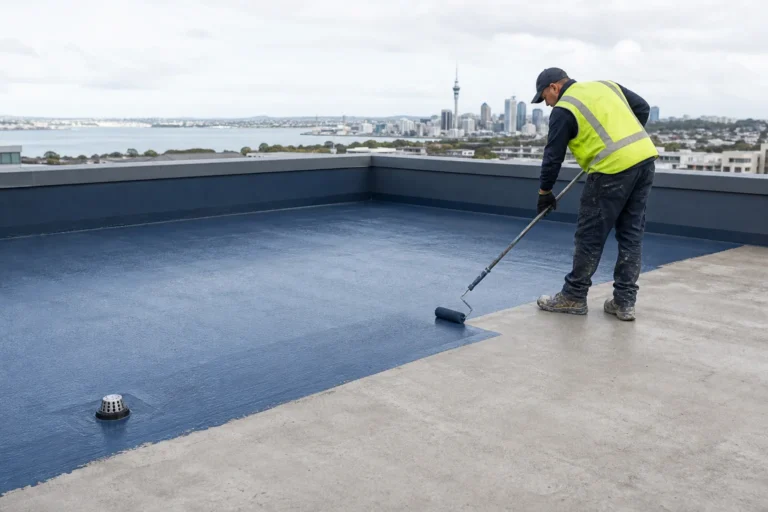
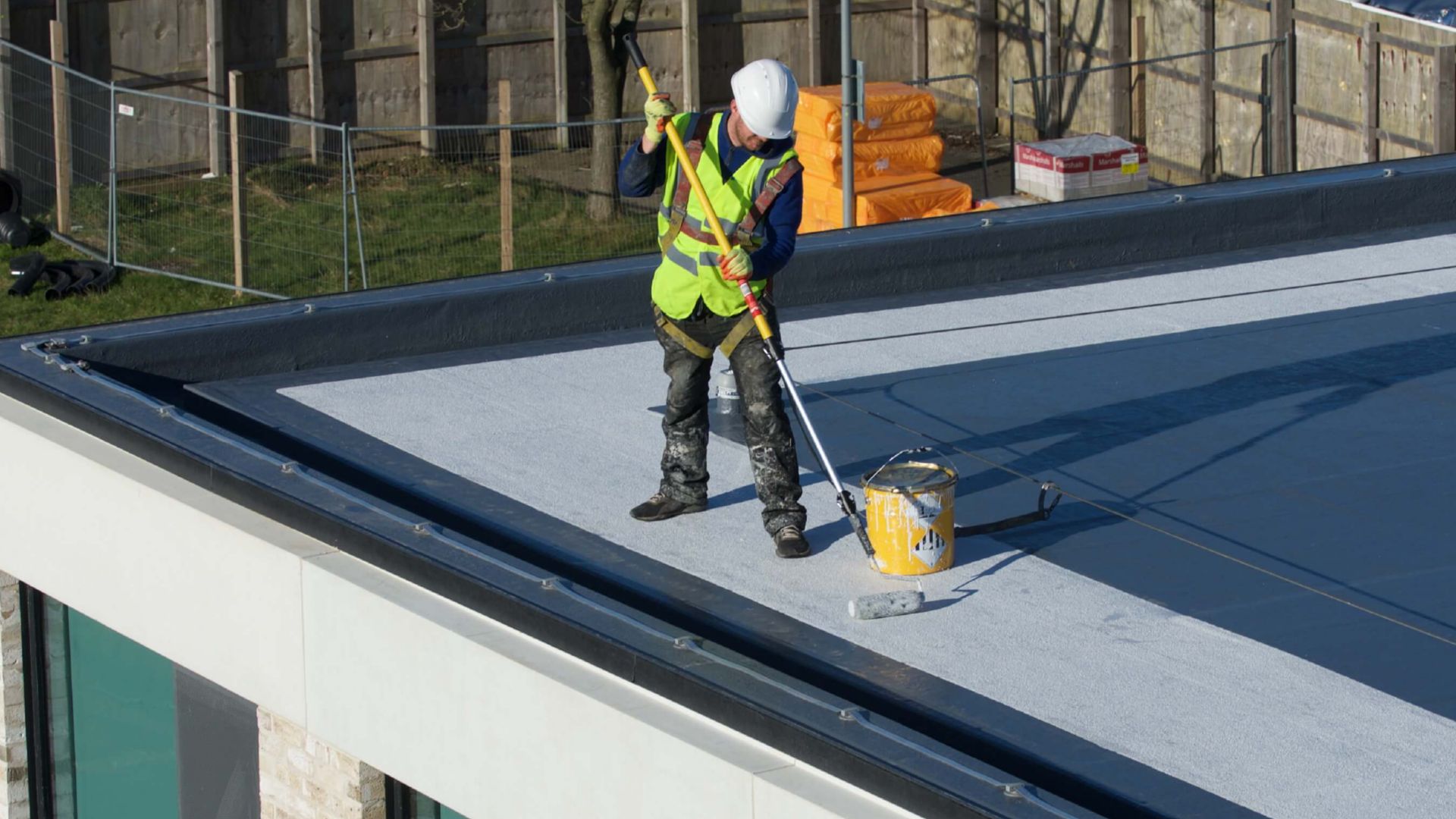
A liquid membrane is rolled, brushed or sprayed onto a prepared surface and cures into a continuous film. Because there are no sheet laps across the main surface, liquid systems can work well around complex shapes, multiple penetrations and refurbishment areas. Reinforcement may be required at corners, joints and other changes of plane.
Their performance depends heavily on preparation and quality control. The substrate must be sound, clean, sufficiently dry and compatible with the primer and membrane. Specified coverage, wet-film thickness, cure time and weather windows are not optional details.
Reinforced bitumen and torch-on membranes
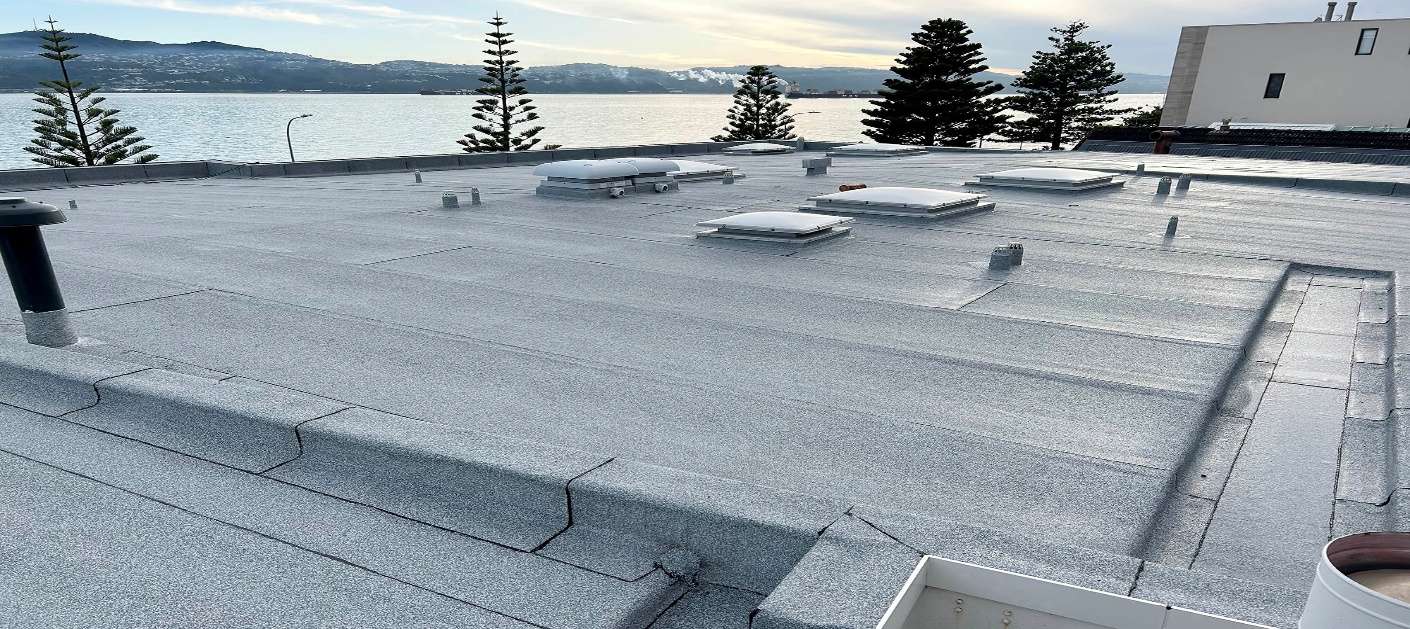
Reinforced modified-bitumen membranes are supplied in rolls and bonded to the roof in a layered system. Torch-on installation uses carefully controlled heat, while other systems may use adhesives or self-adhesive layers. These membranes have a strong track record on flat and low-slope roofs, but their durability still depends on well-formed laps, outlets, upstands and terminations.
Hot-work risks and system warranties make trained installation especially important. For a deeper look at materials and application, see our torch-on waterproofing guide.
Single-ply sheet membranes
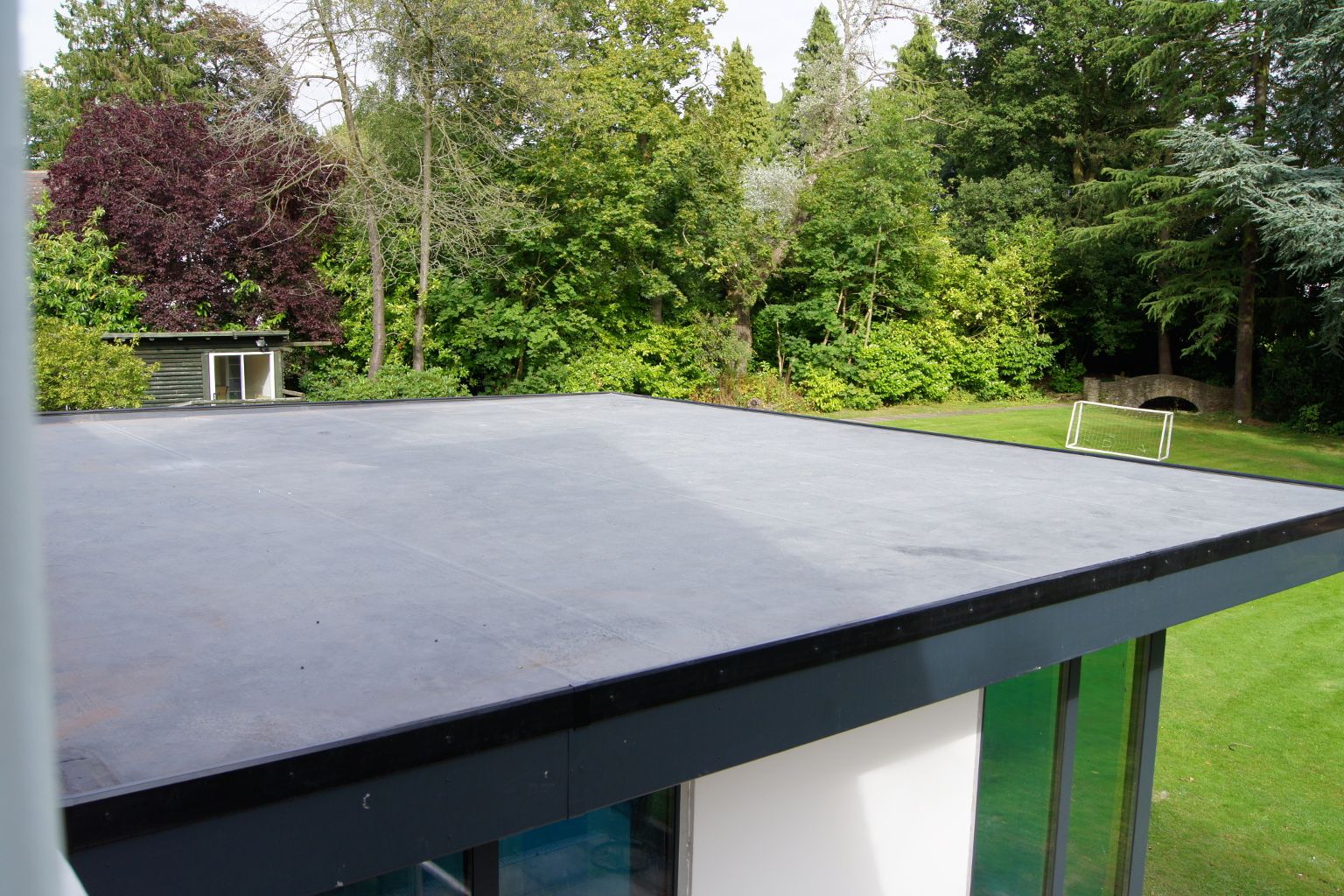
EPDM, TPO and PVC systems use factory-manufactured sheets that are bonded, mechanically fixed or otherwise installed as part of a proprietary roof assembly. Seams may be adhered or heat-welded, depending on the material. They can cover large areas efficiently and offer durable exposed finishes when correctly specified.
The apparent simplicity of a large sheet can be misleading: perimeter restraint, penetrations, movement joints, outlets and compatibility with other materials still control the outcome. Repairs should use the approved method for the particular membrane rather than a generic sealant.
Cementitious and polymer-modified waterproofing
Cement-based products modified with polymers can be useful on compatible concrete and masonry substrates, particularly in protected or system-specific applications. They are easy to confuse with a universal roof coating, but movement tolerance, UV exposure and finishing requirements vary. They should only be used where the complete specification supports the intended exposure and roof movement.
Roof coating or full waterproofing system?
A compatible maintenance coating can sometimes renew the weathering surface of a roof that is still fundamentally sound. It cannot correct rotten or deflecting substrate, wet insulation, failed seams, inadequate drainage or poorly designed junctions. An inspection should establish whether the job is maintenance, a local repair or a full renewal before any coating is selected.
How the right system is chosen
A competent roof assessment considers the whole assembly, including:
- Roof construction and substrate: concrete, plywood, metal, insulation or an existing membrane.
- Falls and drainage: outlet position, overflows, internal gutters and any persistent ponding.
- Detail complexity: parapets, plant, skylights, pipes, edges and changes in level.
- Movement and exposure: thermal movement, foot traffic, UV, wind and coastal conditions.
- Existing condition: trapped moisture, adhesion, contamination, previous coatings and substrate damage.
- Compliance and support: product scope, design evidence, trained installation, warranty and maintenance requirements.
This is why two roofs that look similar from the ground may need different solutions. The lowest initial price is not automatically the best value if it leaves drainage, movement or compatibility problems unresolved.
What professional roof waterproofing involves
- Inspect and diagnose. Trace likely water-entry paths, review drainage and determine whether the membrane or another roof element is responsible.
- Check the build-up. Assess the substrate, moisture condition, falls, access, movement and existing materials.
- Repair the causes. Correct unsound areas, cracks, loose components and drainage defects that the membrane alone cannot solve.
- Prepare the surface. Clean, dry and profile the substrate to the membrane manufacturer’s requirements.
- Prime and detail. Treat corners, outlets, upstands, penetrations, movement joints and terminations before or as part of the main application.
- Install the full system. Apply the specified layers, reinforcement, laps or seams under suitable weather conditions.
- Inspect and hand over. Confirm continuity, complete any specified testing, record product information and explain the maintenance schedule.
Repair or replace?
A targeted repair may be suitable when
- The defect is isolated and the surrounding membrane remains sound.
- The substrate is dry, stable and able to accept a compatible repair.
- The repair detail can be completed within the membrane manufacturer’s requirements.
Full renewal is more likely when
- Cracking, brittleness, blistering or seam failure is widespread.
- Moisture is trapped beneath the system or the substrate has deteriorated.
- There are many incompatible patches and the leak pattern keeps changing.
- Falls, outlets or major junctions need redesign rather than another surface repair.
Maintaining a waterproofed roof
Follow the membrane manufacturer’s inspection and maintenance schedule, and arrange an additional check after severe weather or when new rooftop work is completed. Keep outlets, gutters and overflows clear. Remove debris without damaging the surface, watch for seam movement or blisters, and do not allow new services to be installed through the membrane without an approved detail.
Keep photographs, product records, warranties and repair notes. A small, documented repair carried out early is easier to assess than a collection of unidentified sealants applied after every storm.
Roof waterproofing FAQs
How long does roof waterproofing last?
Service life varies by membrane type, roof design, exposure, workmanship and maintenance. A product warranty is also not the same as a guaranteed service life. Ask for the system specification, warranty conditions and maintenance obligations for your roof.
Can a new membrane be installed over an old one?
Sometimes, but only after checking adhesion, moisture, compatibility, weight, falls and the condition of the substrate below. Overlaying a wet or unstable roof can conceal the problem and shorten the life of the new system.
Will waterproofing fix ponding water?
A membrane may tolerate limited residual water only within its specification, but persistent ponding is primarily a drainage or falls issue. Correcting the cause is more reliable than expecting a coating to compensate for it.
Can roof waterproofing be a DIY job?
Keeping drains clear and reporting damage early are sensible owner tasks. Membrane preparation, detailing and installation are specialist work, particularly where height safety, hot work, consent, compliance evidence or a product warranty is involved.
What affects the cost?
Roof area is only one factor. Access, edge protection, the number of penetrations, substrate repairs, moisture removal, drainage changes, product selection and the number of specified layers can all affect the price. A site assessment produces a more reliable scope than a square-metre rate alone.
Need advice on a leaking or ageing roof?
If you are seeing stains, recurring leaks, ponding water or a membrane that is beginning to split or lift, A2Z Waterproofing can assess the roof and help you plan the next practical step.
For general compliance context, see MBIE’s guidance on Building Code clause E2 — External Moisture. The appropriate compliance pathway must still be confirmed for the specific project.