
Auckland deck waterproofing guide
Deck Waterproofing with Dec-K-ing Membrane Systems
How this trafficable vinyl membrane works, where it suits, what good installation involves and how to look after it.
A deck above a room has two jobs: it must provide a practical outdoor surface and keep weather away from the building below. Viking Dec-K-ing combines those roles in one finished PVC sheet membrane, making it a useful option for selected decks, balconies, walkways and rooftop living areas.
What is Dec-K-ing?
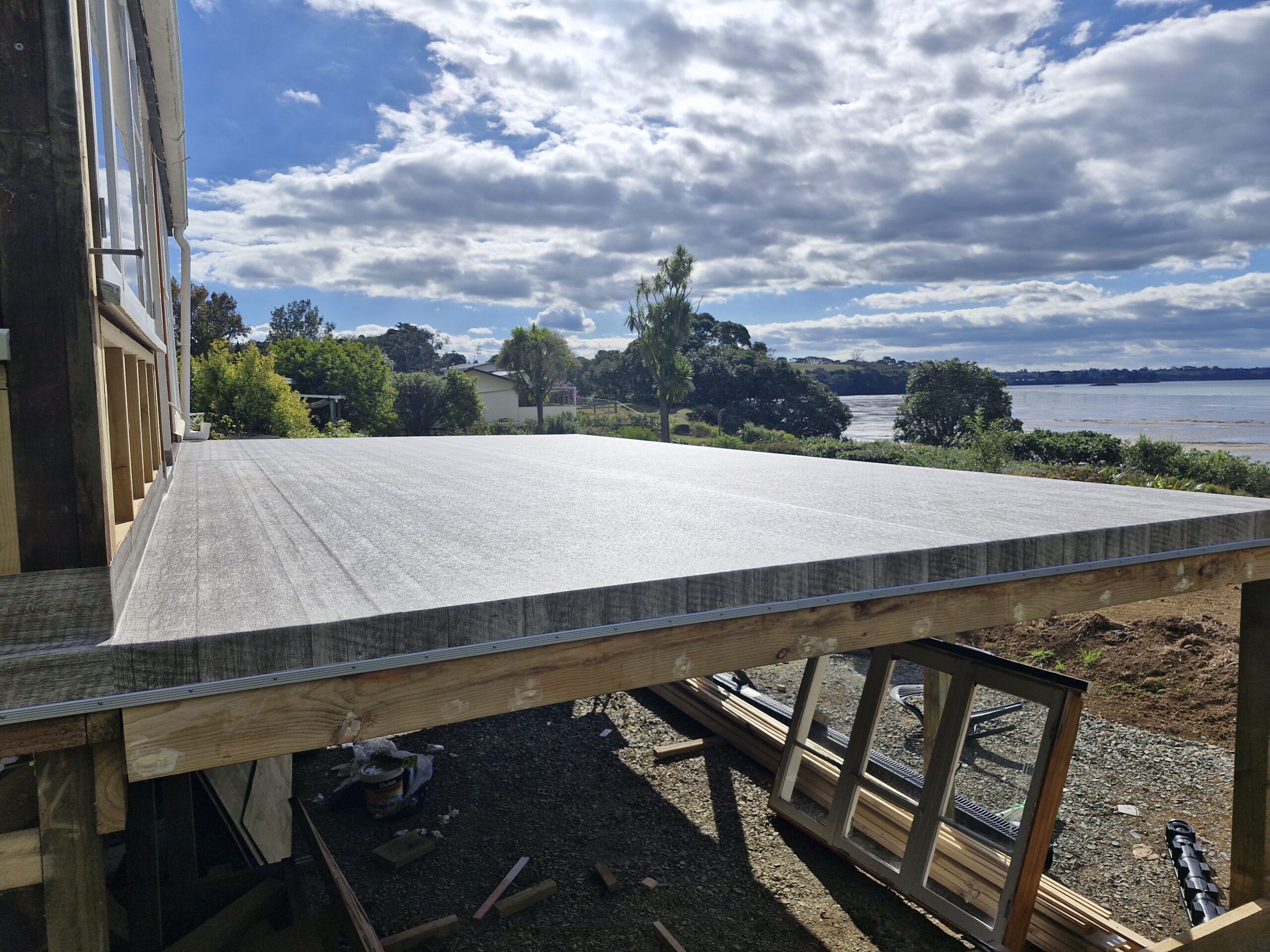
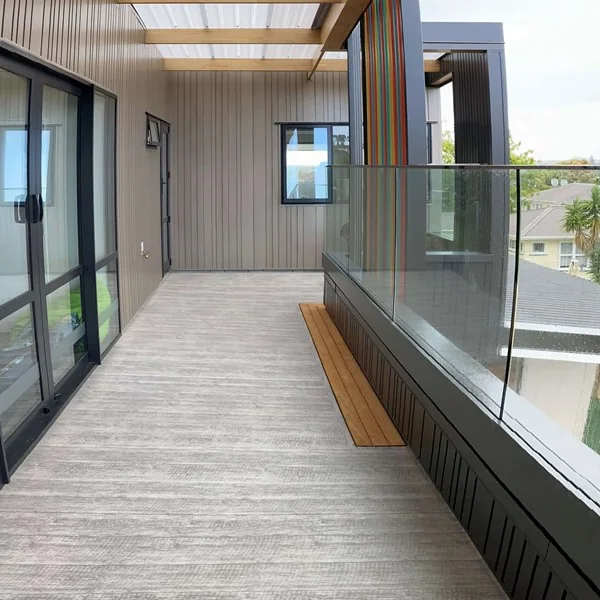
Dec-K-ing is a reinforced, adhesive-fixed PVC sheet membrane designed for pedestrian decks and balconies. The sheets form the exposed walking surface, so a separate tile or floating-deck finish is not normally required. Adjacent sheets and compatible accessories are joined with hot-air welded seams to create a continuous waterproof layer.
The embossed surface is designed to improve underfoot grip, while the range of colours and patterns allows the waterproofing layer to function as the visible finish. As with any outdoor surface, leaves, grease, dirt and standing water can still make it slippery, so cleaning and drainage remain important.
Where can it be used?
Decks over living areas
A trafficable waterproof finish can protect rooms, garages or storage areas below without adding a separate wearing surface.
Balconies and terraces
The system suits many exposed outdoor areas where thresholds, edges, balustrades and drainage can be detailed correctly.
Walkways and ramps
Its finished, embossed surface can suit pedestrian circulation areas within the scope of the current product documentation.
Selected patios and roof decks
These applications require the same disciplined approach to substrate, falls, outlets, upstands and transitions.
Viking lists treated flooring-grade plywood, concrete and fibre-cement as possible substrates. Suitability is not automatic: the structure and surface must meet the current Dec-K-ing specification and substrate checklist for the proposed project.
Why deck details matter more than the open surface
The broad middle of a deck is usually the simplest area to waterproof. Most risk is concentrated where water changes direction or where the membrane meets another building element.
- Falls and outlets: water needs an unobstructed route to a suitable outlet, scupper or external edge. Persistent ponding increases stress on laps and any damaged areas.
- Door thresholds: the transition between inside and outside must manage water without creating an impractical step or an exposed termination.
- Upstands and cladding junctions: the membrane must rise and terminate in the sequence shown by the approved detail.
- Balustrade and post penetrations: fixings through a waterproof deck can become leak paths unless the system is designed around them.
- Edges, corners and scuppers: these three-dimensional details need compatible flashings and careful hot-air welding.
This is why a leak should be diagnosed before a new surface is installed. Water found inside may have entered at a threshold, cladding junction or penetration rather than through the visible field membrane. Our Auckland leak detection guide explains how tracing the water path helps avoid treating the wrong area.
What professional installation involves
- Survey the deck and the spaces below. The installer checks the likely water path, deck geometry, access, outlets, overflows and junctions before recommending a system.
- Confirm the design and compliance pathway. Product scope, substrate, wind exposure, fire considerations, drainage and the relevant consent documentation must be resolved for the actual building.
- Prepare a suitable substrate. The surface needs to be sound, dry, clean, stable and finished to the standard required by Viking. Sheet joints, fixings, contaminants and surface irregularities are addressed before the membrane is laid.
- Plan sheets and critical details. Seams, patterns, thresholds, wall upstands, outlets, posts and perimeter flashings are set out before adhesive is applied.
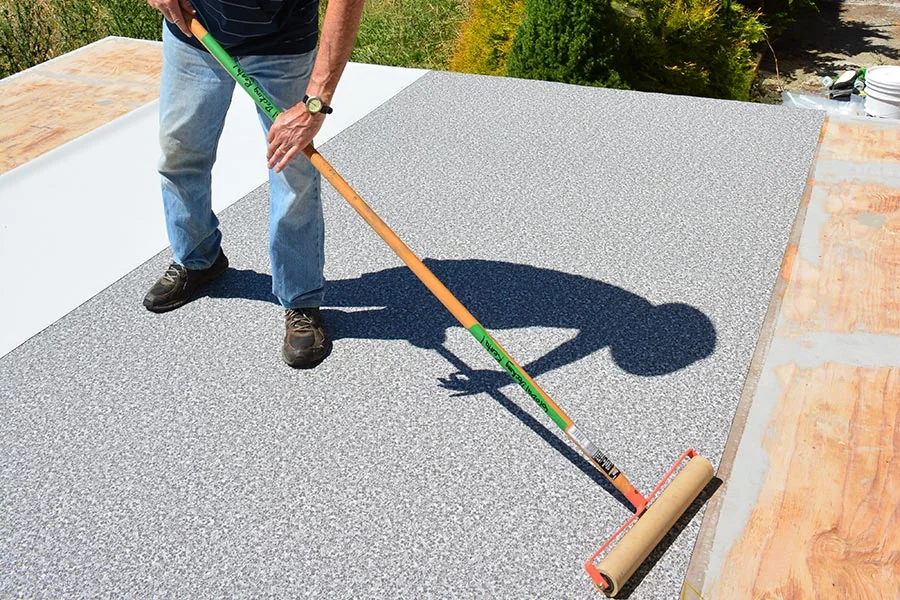
- Adhere and weld the membrane. The sheet is fully bonded in suitable weather conditions, rolled to remove trapped air and hot-air welded at laps and accessories by a Viking Approved Applicator.
- Inspect and hand over the system. Welds, terminations and drainage details are checked, and the owner receives the relevant warranty and maintenance information.
Repair, overlay or replace?
A small isolated puncture may be repairable by an approved applicator. Widespread bubbling, split seams, failed perimeter details or moisture-damaged plywood can point to a larger problem. The right decision depends on what has failed and whether the substrate beneath the membrane remains sound.
- Consider a local repair when damage is isolated, the surrounding membrane is stable and a compatible repair can be properly welded.
- Investigate more widely when staining appears below several junctions, the deck ponds, or the source cannot be confirmed from the visible defect.
- Expect replacement or structural work when the substrate has softened, fixings have lost hold, falls are inadequate or critical design details cannot be corrected locally.
Do not seal over damp timber or assume that a surface patch has fixed concealed damage. Opening selected areas for inspection can be less costly than allowing moisture to remain trapped.
Design choices and finish options
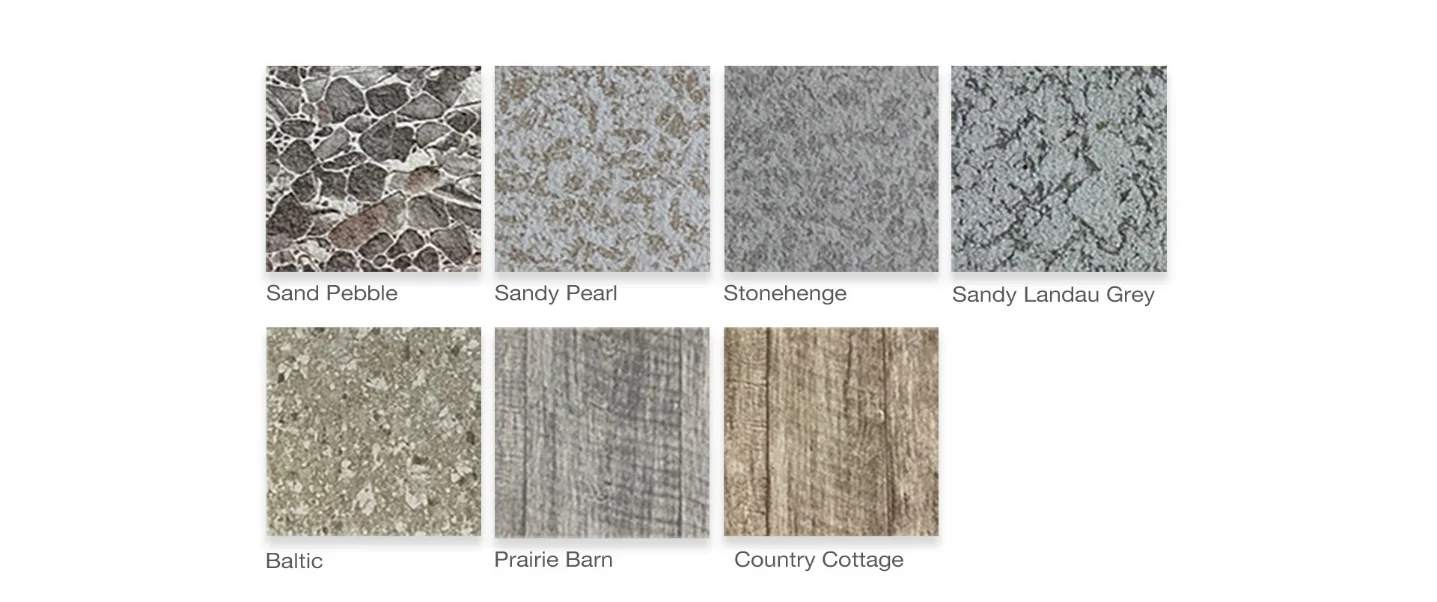
Dec-K-ing is available in a range of stone, granular and timber-look patterns. Colour and pattern affect the appearance of the deck, but selection should also consider exposure, surrounding cladding, how readily the surface will show dirt and the availability of matching accessories.
Maintenance that protects the deck
Viking’s current care guide recommends cleaning the deck at least annually and checking drainage twice a year, with more frequent attention where leaves and other organic debris collect. Hot soapy water with a brush or broom is normally sufficient; use only a cleaner approved for the membrane when treating stubborn stains.
- Keep outlets, scuppers and surface channels clear.
- Inspect the whole deck after severe weather or nearby building work.
- Check parapets, flashings, edging and high-risk junctions for deterioration.
- Protect the membrane before moving equipment, barbecues or heavy furniture.
- Keep sharp objects, solvents, petroleum products, grease and cooking fats away from the surface.
- Arrange prompt repair by an approved applicator if the membrane is cut, punctured or lifting.
New Zealand compliance and warranty context
Viking Dec-K-ing is covered by BRANZ Appraisal No. 411. The appraisal describes it as a reinforced PVC sheet membrane for pedestrian decks and balconies and must be read together with the current technical literature and project conditions.
Deck waterproofing is addressed under Building Code Clause E2 – External Moisture. MBIE’s current E2 guidance explains the available compliance documents, but a product appraisal is not a blanket approval for every building. The designer and building consent authority still need the proposed system, details and supporting evidence to suit the specific project.
Viking currently advertises a 20-year product warranty for Dec-K-ing when its requirements are met. Product warranty, workmanship cover and expected service life are different things, so confirm the current terms, approved applicator status, maintenance duties and exclusions in writing before work begins.
Frequently asked questions
Can Dec-K-ing go over an existing leaking deck?
Only after the existing system and substrate have been assessed. Covering a wet, unstable or poorly drained deck can conceal the cause and trap moisture. The installer may need to remove part or all of the old surface first.
Does Dec-K-ing need tiles or decking over it?
No. It is designed as a trafficable finished membrane. Adding another surface changes drainage, thresholds, loading and maintenance access, so it should not be done without a compatible design.
Can it be installed on concrete?
Concrete is one of the substrates listed by Viking, along with treated flooring-grade plywood and fibre-cement. Each has product-specific preparation requirements, and the substrate must be accepted before installation begins.
Is Dec-K-ing suitable for every balcony?
No single system suits every design. Complex geometry, heavy mechanical traffic, inadequate thresholds, unsuitable substrates or drainage constraints may point to another solution. A site assessment should confirm the best approach.
What does Dec-K-ing installation cost in Auckland?
Cost depends on area, access, substrate repairs, removal of the old system, drainage work and the number of detailed junctions. A site-specific scope is more useful than a square-metre rate that excludes preparation and remedial work.
Concerned about a deck or balcony?
A2Z Waterproofing can assess the membrane, substrate, drainage and critical junctions, then explain whether repair, replacement or a different system is the sensible next step.