
Leak Detection
🏠 1. Building & Roof Leak Detection
Leaks often appear as stains, damp patches, or blistered paint — but the source is usually not directly above the damage.
🔹 Detection methods:
- Visual Inspection: Look for cracks, blistering, or loose flashing.
- Water Hose Test: Spray small roof sections systematically to pinpoint entry.
- Infrared Thermography: A thermal camera shows cooler (wet) areas under membranes.
- Electronic Leak Detection (ELD):
- Uses electric current to trace breaches in membranes.
- Accurate for flat roofs (PVC, TPO, Bitumen).
- Tracer Gas Testing: Injects harmless gas (e.g., hydrogen/nitrogen mix); detectors find where it escapes.
🧱 2. Basement & Underground Leak Detection
Leaks below ground can be hidden by soil or concrete.
🔹 Detection methods:
- Moisture Meter or Hygrometer: Measures dampness inside walls and slabs.
- Infrared Scanning: Finds cool, damp zones behind walls.
- Dye Testing: Non-toxic colored dye added to external water; see where it reappears.
- Pressure Testing: Tests integrity of waterproofing or drainage pipes.
- Acoustic Leak Detection: Sensitive microphones detect sound of escaping water through concrete.
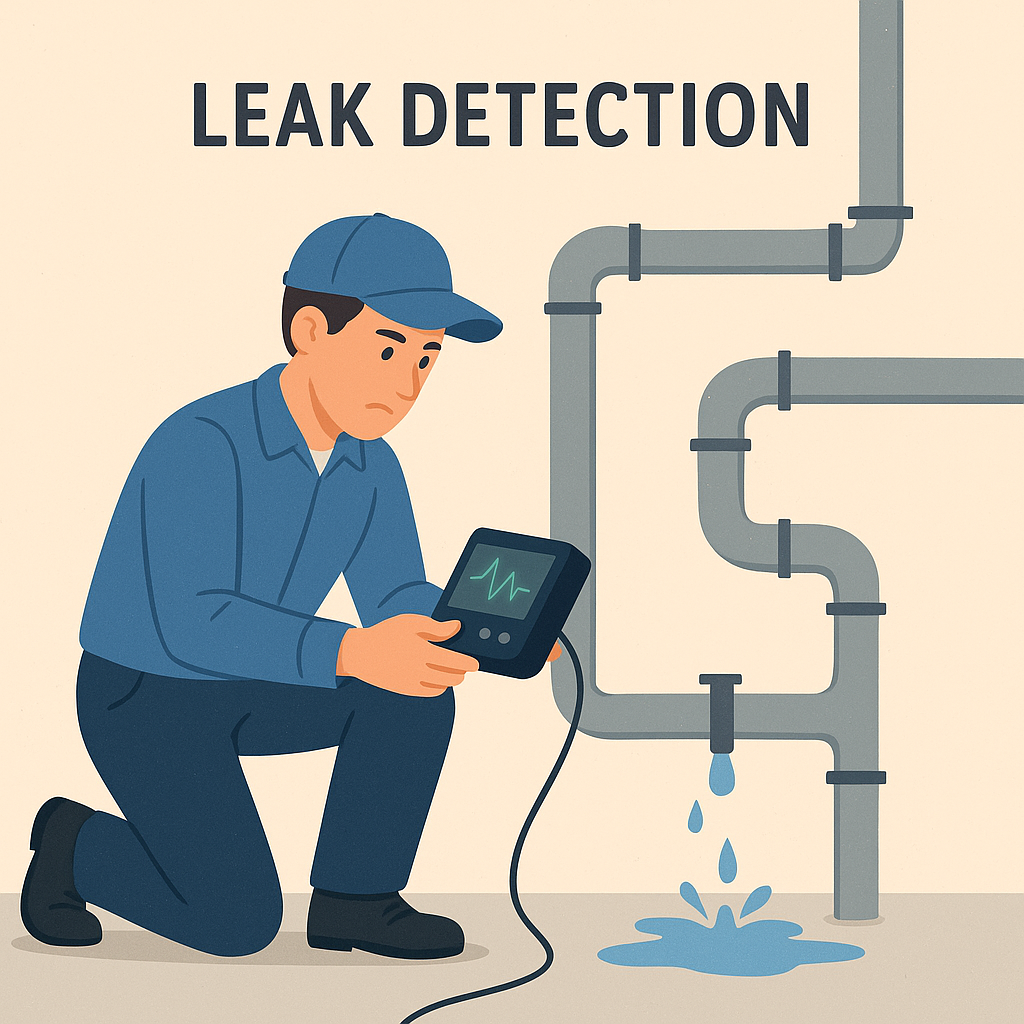
🚰 3. Plumbing & Pipe Leak Detection
Hidden leaks in walls or under floors cause high water bills or mold.
🔹 Detection methods:
- Meter Test: Turn off all taps — if the water meter still moves, you have a leak.
- Acoustic Listening Devices: Detect sound waves from escaping pressurized water.
- Thermal Imaging: Identifies hot/cold patches from leaking pipes.
- Tracer Gas or Ultrasonic Detection: Finds leaks without excavation.
🌊 4. Waterproofing Membrane Leak Detection
Used in roofs, balconies, basements, tunnels, and tanks.
🔹 Techniques:
- Low Voltage ELD (vector mapping):
- A charged probe detects breaches by measuring current flow through wet insulation.
- High Voltage ELD (spark testing):
- Electric current passed over a dry membrane; sparks form where cracks exist.
- Flood Testing:
- Flood area with water for 24–48 hours; monitor for leaks below.
- Simple but time-consuming and risky for interior spaces.
⚙️ 5. Modern Leak Detection Tools
- Infrared Cameras → thermal differences = hidden moisture.
- Moisture Mapping Systems → identifies spread of damp.
- Smart Leak Sensors (IoT) → detect and alert leaks in real time (for plumbing systems).